
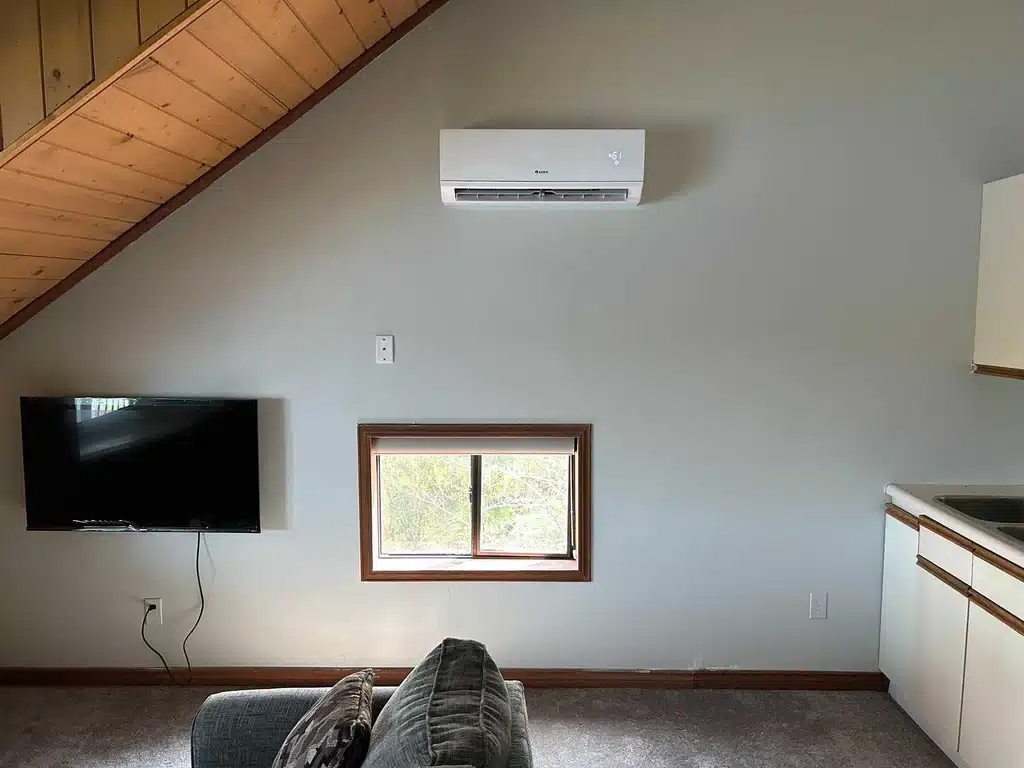
Ductless mini splits are quickly becoming the default heating and cooling choice for Southwest Colorado homes, and the reasons are refreshingly practical. They heat and cool efficiently, install without major ductwork, and handle the region’s wide temperature swings better than many traditional systems.
For homeowners in Durango, Pagosa Springs, Bayfield, and surrounding mountain communities, comfort can be tricky. Older homes, additions, cabins, and custom layouts often leave certain rooms too cold in winter or too warm in summer.
This article explains what these systems are, how they perform at high elevation, how they compare to traditional HVAC, and what to consider before you upgrade.
What are ductless mini splits and how do they work?
Ductless mini splits are heating and cooling systems that deliver conditioned air directly into rooms without using traditional ductwork. A typical system connects an outdoor heat pump to one or more indoor air handlers through small refrigerant lines.
Instead of pushing air through long duct runs, each indoor unit conditions the space it serves. That means less energy lost to leaky ducts and more precise control over individual rooms.
The technology relies on a heat pump. In summer, the system moves heat out of your home. In winter, it pulls available heat from outdoor air and moves it inside, even when temperatures drop.
What makes the inverter technology different?
Inverter technology lets the system adjust its output instead of switching fully on and off. The unit can run at lower speeds for longer periods, which holds a steadier temperature and reduces wasted energy.
That smooth operation matters in a climate where mornings, afternoons, and nights can each demand something different from your system.
Why are ductless mini splits a good fit for Southwest Colorado?
Ductless mini splits suit Southwest Colorado because they handle high elevation, cold winters, rapid temperature swings, and homes that were never built for central ductwork. These are exactly the conditions homeowners here deal with every season.
Many properties in this region were built as cabins, custom homes, or staged additions. Running central ducts through those layouts is often expensive, invasive, or simply impossible.
A ductless system needs only a small opening in the wall for refrigerant lines. That keeps the structure intact while still delivering room-by-room comfort.
How do these systems perform at high elevation?
Cold-climate ductless mini splits can deliver reliable heat at high elevation when they’re sized and installed correctly. Mitsubishi cold-climate models, for example, are engineered to keep producing heat in sub-freezing conditions.
Elevation affects temperature, weather exposure, and heating demand. A system in Silverton faces colder nights and heavier snow than one in a lower valley.
That’s why proper sizing matters so much. A unit matched to your home’s actual heating load and elevation will perform steadily, while an undersized one will struggle.
How do they handle Colorado’s temperature swings?
Ductless mini splits manage temperature swings well because the inverter can ramp output up or down gradually. A cool morning, a sunny afternoon, and a freezing night no longer force the system into hard on-off cycles.
This is especially useful in rooms with large windows, upstairs bedrooms, and sun-facing additions. You can control those zones individually instead of overheating or overcooling the whole house.
How do ductless mini splits compare to traditional HVAC?
Ductless mini splits offer better zoning, higher efficiency, and easier installation than traditional ducted HVAC in many Southwest Colorado homes. Traditional systems still make sense in some cases, but the gap has narrowed.
Ducted systems lose energy through leaks and gaps in the ductwork. Studies from the U.S. Department of Energy note that duct losses can account for a meaningful share of total energy use in central systems.
Ductless systems skip that loss entirely by delivering air straight into the room.
When does traditional HVAC still make sense?
Traditional ducted HVAC still works well in homes that already have quality ductwork in good condition. If your ducts are sealed, insulated, and properly sized, replacing them may not be worth the cost.
Large homes built for central air can also benefit from a single ducted system rather than many indoor units.
The honest tradeoff is this: ductless wins on flexibility and efficiency, while existing ductwork can win on upfront cost when it’s already in place.
What about cost differences?
Ductless mini splits often cost more upfront than a basic furnace or window unit, but they can lower monthly energy use over time. The final price depends on the number of zones, indoor unit styles, and installation complexity.
A single-zone system for one room costs far less than a multi-zone setup for an entire house. Long line runs, difficult access, or electrical upgrades also affect the total.
The clearest way to compare is an in-home assessment that looks at your layout, insulation, and comfort goals.
Who should consider ductless mini splits?
Homeowners with ductless rooms, comfort problems, additions, or efficiency goals are the strongest candidates for ductless mini splits. They solve specific problems that frustrate many Southwest Colorado households.
These systems work especially well for:
- Cabins and mountain homes with uneven heating across rooms.
- Older homes that lack space for traditional ductwork.
- Additions, garages, and finished basements that overload an existing system.
- Sunrooms and home offices that need independent temperature control.
- Homeowners replacing electric baseboard heaters or window air conditioners.
If one room in your house is always too hot or too cold, a single-zone unit can fix that without touching the rest of the home.
Why choose Goldwater Plumbing for your ductless mini split project?
Goldwater Plumbing brings hands-on experience with ductless systems and a deep understanding of Southwest Colorado homes. Mitsubishi equipment needs correct design, careful installation, and technicians who know how ductless heat pumps behave in cold weather.
Because the team specializes in this technology, they can source premium equipment and parts when other contractors cannot. That sourcing advantage matters when you need reliable service without long delays.
The team serves Durango, La Plata County, Silverton, Pagosa Springs, Bayfield, Hermosa, Mancos, and Cortez. You can explore service details at [goldwaterplumbing.com].
Local knowledge shapes every project. A mini split in a mountain cabin faces different snow, sun, and elevation conditions than one in a townhome, and the install should reflect that.
Should you switch to ductless mini splits?
You should consider switching to ductless if you face comfort gaps, aging equipment, or rising energy costs. Use these points to evaluate your next step:
- Choose ductless if you have rooms that never reach a comfortable temperature with your current system.
- Choose ductless if you’re adding living space and don’t want to overload an existing furnace or air conditioner.
- Choose ductless if your home lacks usable space for traditional ductwork.
- Stick with ducted if your existing ductwork is sealed, well-insulated, and recently installed.
- Schedule a professional load calculation before deciding, since proper sizing determines real-world performance.
A short consultation can tell you whether the investment fits your home, your climate, and the way you actually use each room.
What Customers Often Ask
How long do ductless mini splits last?
Ductless mini splits typically last 15 to 20 years with proper installation and routine maintenance. Cleaning washable filters regularly and scheduling an annual professional inspection helps protect that lifespan.
Do ductless systems really heat in cold Colorado winters?
Yes, cold-climate models continue producing heat in sub-freezing temperatures. Many Mitsubishi systems maintain strong heating output well below freezing, which makes them practical for mountain communities like Silverton and Durango.
How many indoor units do I need?
The number depends on your home’s layout and which rooms you want to condition. A single-zone system serves one room, while a multi-zone setup can connect several indoor units to one outdoor heat pump for whole-home comfort.
Are ductless mini splits noisy?
No, indoor units run quietly, often quieter than a typical refrigerator. The inverter compressor and variable fan speeds keep operation smooth and low in volume.
How often do they need maintenance?
Plan on cleaning filters every four to six weeks during heavy use and scheduling professional service once a year. Homes with pets, wood stoves, or seasonal dust may need more frequent filter cleaning.
The bottom line on ductless mini splits in Southwest Colorado
Ductless mini splits are earning their reputation as the default HVAC choice for Southwest Colorado homes because they solve real, practical problems. They deliver efficient heating and cooling, adapt to homes without ductwork, and hold steady through the region’s demanding elevation and temperature swings.
The key is matching the right system to your home and getting the installation right the first time.
If you live in Durango, Pagosa Springs, Bayfield, or the surrounding area, Goldwater Plumbing can help you compare your options clearly. Talk to a specialist at [goldwaterplumbing.com] to schedule a consultation for your Colorado home.